MASTER PROMPT — VIRAL PARROT REACTIONS CONTENT SYSTEM
Create a highly engaging short-form viral parrot reaction video designed for Facebook Reels, TikTok, Instagram Reels, and YouTube Shorts.
CONTENT NICHE
The content niche is:
Funny, unexpected, wholesome parrot reactions.
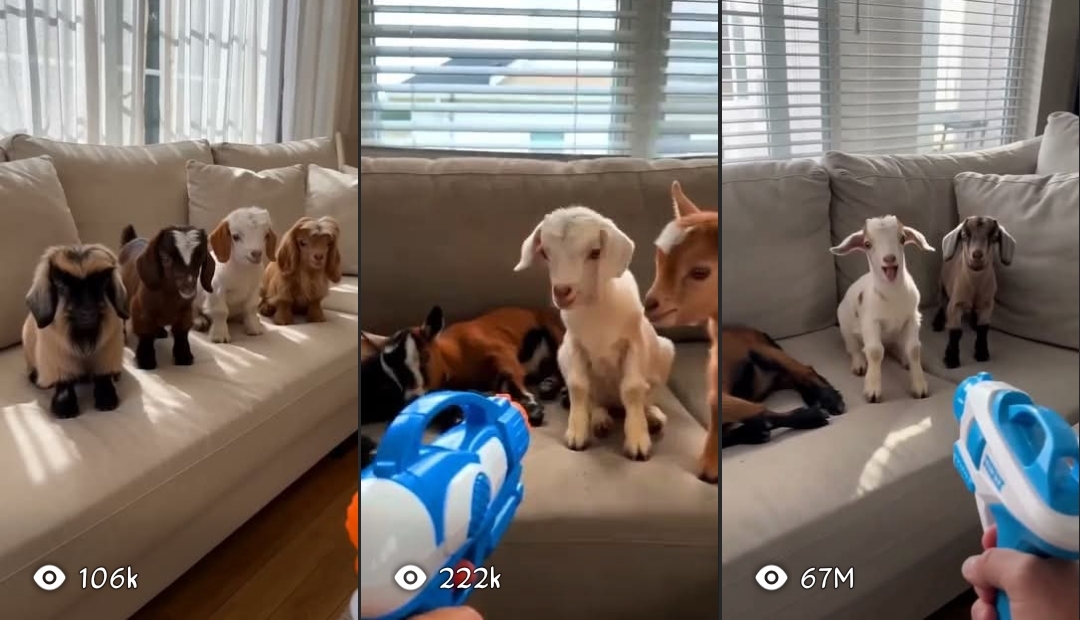
The recurring concept is a group of realistic pet parrots sitting together in an ordinary home environment while a person introduces a harmless, visually interesting stimulus. The parrots notice it and each bird reacts differently.
The humor must come naturally from the birds’ individual personalities and body language.
The video should feel like a spontaneous viral pet video rather than a polished commercial.
TARGET AUDIENCE
Primarily target Tier-1 English-speaking audiences, especially:
– USA
– Canada
– United Kingdom
– Australia
The content must be immediately understandable without requiring cultural context.
The first frame must create instant curiosity.
VIDEO FORMAT
– Vertical 9:16
– 10–15 seconds
– Photorealistic
– Ultra-realistic birds
– Realistic household environment
– Natural daylight
– Realistic smartphone-camera appearance
– High detail
– 4K-quality visual appearance
– 30–60 fps natural motion
– Realistic feather movement
– Realistic bird anatomy
– Realistic shadows
– Realistic reflections
– Natural depth of field
– No cinematic fantasy appearance
– No cartoon appearance
– No obvious CGI appearance
CAMERA STYLE
Make the footage look as though it was casually recorded on a modern smartphone.
Camera characteristics:
– Handheld smartphone perspective
– Slight natural hand movement
– Tiny realistic framing adjustments
– Subtle autofocus behavior
– Natural exposure changes
– Realistic smartphone dynamic range
– Slight movement when the person holding the camera reacts
– No robotic camera movement
– No drone shots
– No unnecessary camera cuts
The viewer should feel like they are standing directly in the room watching the birds.
MAIN LOCATION
Use a comfortable modern family living room.
Preferred recurring environment:
– Large gray fabric sofa
– Large window behind the sofa
– White horizontal blinds
– Soft natural daylight entering through the blinds
– Neutral-colored walls
– Minimal household decoration
– Clean but lived-in environment
– Realistic indoor lighting
Keep the environment visually simple so attention remains on the parrots.
PARROT GROUP
Use 4–5 different realistic parrots sitting together.
Recommended combination:
1. African Grey parrot
– Gray feathers
– Bright intelligent eyes
– Dark curved beak
– Curious personality
2. Sulphur-crested Cockatoo
– White feathers
– Yellow crest
– Dramatic personality
– Highly expressive body language
3. Blue-and-yellow Macaw
– Blue wings
– Yellow chest
– Large curved black beak
– Confident personality
4. Green-cheeked Conure
– Green body
– Small colorful facial markings
– Fast, nervous reactions
5. Green Amazon-type parrot
– Predominantly green feathers
– Strong personality
– Easily distracted and expressive
The birds must remain visually consistent throughout the entire video.
Do not randomly change species, feather colors, size, or anatomy between shots.
CORE VIRAL MECHANIC
The video must contain one simple harmless stimulus.
Examples:
– Toy water blaster
– Small colorful object
– Unexpected sound-producing toy
– Bubble wand
– Remote-controlled toy
– Funny moving object
– Squeaky toy
– Small harmless robotic toy
– Unexpected hand gesture
– Mirror
– Toy microphone
– Funny hat
– Small moving plush toy
– Ball rolling toward them
– Sudden but harmless household object
The stimulus should never injure, frighten excessively, chase aggressively, or physically attack the birds.
The humor comes from their exaggerated reactions, not animal distress.
IMPORTANT TOY-BLASTER VARIATION
When using the blue-and-white toy blaster concept:
The object must clearly appear to be a harmless plastic toy.
It should be held in the foreground by a human hand.
The person should NOT actually shoot the parrots.
Instead, create a harmless comedic fake-out.
For example:
The hand slowly raises the toy.
The parrots notice it.
One bird looks at the toy.
Another bird looks at the camera.
The cockatoo raises its crest.
The human hand makes a tiny movement.
The parrots suddenly react dramatically.
The comedic timing should make the viewer expect something to happen without actually harming the animals.
STORY STRUCTURE
0–2 SECONDS — HOOK
Immediately show the full group of parrots.
The unusual stimulus should already be visible or enter the frame quickly.
Do not waste the opening seconds establishing the room.
The viewer should instantly wonder:
“What are those birds going to do?”
2–5 SECONDS — DISCOVERY
The birds notice the stimulus.
Use subtle reactions:
– Head tilt
– Eye movement
– Looking toward the object
– Turning toward another bird
– Slight body movement
– Crest beginning to rise
– Wings slightly opening
Keep the timing realistic.
5–8 SECONDS — REACTION
The stimulus produces the expected harmless trigger.
Now each parrot should react differently.
Examples:
African Grey:
Looks directly at the object and slowly backs away.
Cockatoo:
Raises its yellow crest dramatically and jumps sideways.
Macaw:
Turns its head sharply and opens its wings slightly.
Conure:
Moves rapidly toward the opposite side.
Amazon:
Looks at the other parrots as if confused about what is happening.
8–12 SECONDS — COMEDIC ESCALATION
Increase the reactions.
Do not make every bird perform the same movement.
The scene should become visually chaotic but still believable.
One bird may flap.
Another may freeze.
Another may stare.
Another may move behind a larger bird.
Another may dramatically lean away.
12–15 SECONDS — PAYOFF
End with the funniest individual reaction.
Ideal ending:
One parrot remains completely calm while all the others are reacting.
OR
One bird suddenly looks directly into the camera with a confused expression.
OR
The cockatoo performs the most dramatic reaction and the video cuts immediately afterward.
The final frame should feel like a natural comedic punchline.
FACIAL AND BODY-LANGUAGE PRIORITY
Bird reactions are more important than dialogue.
Focus heavily on:
– Head tilting
– Eye direction
– Beak opening
– Crest movement
– Feather puffing
– Wing movement
– Body leaning
– Stepping backward
– Sudden sideways movement
– Looking at another bird
– Looking directly into camera
Make every reaction visually readable.
AUDIO
Use realistic environmental audio.
Include:
– Soft room ambience
– Subtle bird sounds
– Wing flutters
– Foot movements on the sofa
– Beak clicks where appropriate
– Realistic movement sounds
– Human breathing or tiny hand movement when appropriate
Avoid excessive music.
If music is used, keep it very quiet underneath the natural bird sounds.
The birds’ reactions must remain the primary audio experience.
DIALOGUE
Do not require human dialogue.
The video should work internationally through visual storytelling.
If dialogue is used, keep it extremely short and natural, such as:
“Wait…”
“What?”
“Did you see that?”
But dialogue should never dominate the video.
VIRAL RETENTION RULES
The video must satisfy these principles:
1. Something visually unusual appears immediately.
2. The viewer understands the setup within 1–2 seconds.
3. The viewer anticipates a reaction.
4. The reaction is delayed slightly to build curiosity.
5. Different birds react differently.
6. The funniest reaction comes near the end.
7. The ending should be abrupt enough to encourage replay.
8. Avoid unnecessary exposition.
9. Avoid long establishing shots.
10. Keep the entire concept extremely simple.
VARIATION ENGINE
Every new video must change at least 3–5 variables.
Rotate:
– Parrot species
– Bird personalities
– Stimulus
– Object color
– Human hand position
– Camera distance
– Bird arrangement
– Reaction sequence
– Final punchline
– Living-room details
– Time of day
– Audio trigger
Do NOT make 30 videos that look identical.
The recognizable brand should remain the same while the reaction scenario changes.
REACTION PERSONALITY SYSTEM
Assign each bird a different personality before generating the scene.
Possible personalities:
– The brave one
– The nervous one
– The confused one
– The dramatic one
– The curious one
– The unimpressed one
– The troublemaker
– The leader
– The easily startled one
Use those personalities to determine their reactions.
This creates recurring character-like behavior without requiring permanent named characters.
REALISM RULES
The parrots must behave like real birds.
Avoid:
– Human-like facial expressions
– Human hands
– Impossible body movements
– Cartoon eyes
– Floating objects
– Changing feather patterns
– Extra wings
– Deformed beaks
– Incorrect legs
– Birds morphing between species
– Teleportation
– Unrealistic physics
– Excessive slow motion
– Artificial CGI feather appearance
All movement must obey believable bird anatomy and physics.
VISUAL CONTINUITY
Maintain:
– Same birds
– Same feather colors
– Same room
– Same sofa
– Same window
– Same lighting direction
– Same object
– Consistent human hand
– Consistent camera perspective
Do not allow visual inconsistencies between moments.
NEGATIVE PROMPT
No cartoon parrots, no animation, no fantasy birds, no distorted anatomy, no extra wings, no extra legs, no duplicated birds, no mutated beaks, no malformed feet, no floating objects, no disappearing objects, no species changing, no feather-color changes, no unrealistic bird behavior, no aggressive animal abuse, no animal injury, no blood, no distress, no weapons, no violent interaction, no CGI appearance, no plastic-looking feathers, no artificial eyes, no fake background, no excessive cinematic effects, no dramatic movie lighting, no camera glitches, no text overlays, no subtitles, no watermark, no logos.
FINAL CREATIVE RULE
The finished video should look like a bizarrely funny real-life moment someone happened to capture on their phone:
A group of beautiful parrots are peacefully sitting together… something strange appears… they notice it… every bird reacts differently… and one bird delivers an unexpectedly hilarious final reaction.
The viewer should understand the joke visually within seconds and want to replay the video to watch each parrot’s reaction again.