MASTER PROMPT — VIRAL TODDLER REAL-WORLD SCENE SYSTEM
Create an ORIGINAL ultra-photorealistic vertical social-media photograph of an irresistibly adorable toddler having an unexpected but wholesome everyday adventure in a recognizable real-world adult environment.
MAIN CHARACTER:
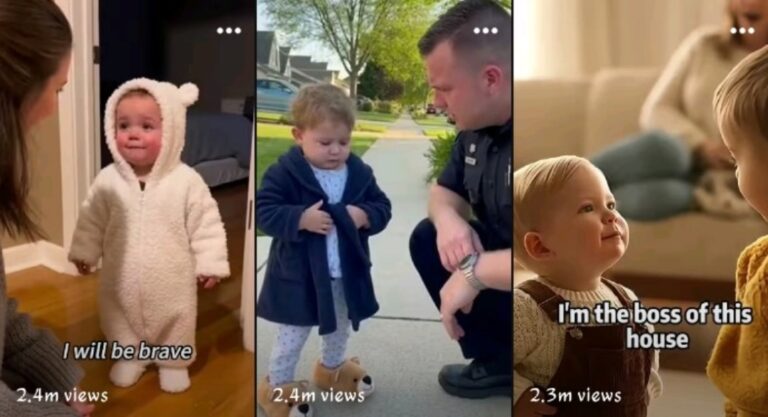
A beautiful realistic toddler approximately 1–2 years old, with naturally chubby cheeks, soft realistic baby skin, bright expressive eyes, tiny realistic hands, natural baby hair and authentic toddler proportions.
The toddler must look genuinely human and naturally adorable, NOT like a doll, cartoon, CGI character or miniature adult.
The toddler is the unmistakable main subject and should occupy approximately 40–60% of the visual attention.
FACIAL EXPRESSION:
Give the toddler an extremely expressive but believable facial reaction that immediately communicates the situation.
Possible emotions:
astonished, delighted, confused, curious, excited, mischievous, proud, shocked, fascinated, hungry, suspicious, amazed or intensely focused.
The eyes should be highly expressive and naturally catch the available light.
SCENE CONCEPT:
Place the toddler inside a realistic everyday adult environment where the child is doing something unexpectedly cute, funny or unusual.
The scene must communicate a simple visual story in ONE FRAME.
LOCATION:
Use a highly recognizable commercial or public environment such as:
modern fast-food restaurant,
donut shop,
bakery,
pizza restaurant,
ice cream shop,
cinema,
supermarket,
grocery store,
shopping mall,
electronics store,
toy store,
department store,
coffee shop,
bookstore,
airport food court,
sports store,
farmers market,
convenience store,
pet store,
arcade,
clothing store,
or children’s entertainment venue.
The environment should contain realistic contextual details such as counters, shelves, display cases, menus, refrigerators, checkout screens, products, signage, tables, employees and customers.
Do not make the background empty.
TODDLER ACTION:
Give the toddler ONE extremely clear and visually interesting action.
Examples:
struggling to carry an enormous pizza,
standing proudly beside a giant birthday cake,
reaching for an oversized donut,
trying to push a miniature shopping cart,
holding an enormous popcorn bucket,
examining a giant pretzel,
choosing between two giant desserts,
standing at a supermarket checkout holding one unexpected item,
carrying a huge shopping bag,
staring intensely at a bakery display,
trying to lift a giant watermelon,
presenting a giant burger,
holding an oversized ice-cream cone,
looking inside a huge cereal box,
riding a tiny shopping trolley,
protectively guarding a giant cookie,
trying to share a giant donut with another toddler,
or reacting dramatically to something on a store shelf.
The action must be instantly understandable without text.
OVERSIZED OBJECT:
Whenever appropriate, make the central object noticeably oversized relative to the toddler.
The scale difference should be amusing and visually striking while still looking physically plausible.
The object must have extremely realistic textures:
food should have realistic crumbs, moisture, glaze, cheese, bread texture, reflections and imperfections;
products should have realistic packaging;
shopping objects should have believable materials.
TODDLER CLOTHING:
Dress the child in fashionable modern toddler clothing appropriate for the location.
Use combinations such as:
cute hoodie + shorts + sneakers,
baseball cap + sweatshirt + cargo shorts,
colorful jacket + jeans + sneakers,
cozy sweater + beanie + trousers,
varsity jacket + shorts + sneakers,
overalls + casual shirt,
rain jacket + boots,
or stylish children’s streetwear.
Add one memorable accessory such as a cap, beanie, tiny backpack or colorful sneakers.
Every new scene should use a DIFFERENT outfit combination.
CAMERA:
Vertical 9:16 composition.
Photographed from approximately toddler eye level or slightly below.
Use a natural 35mm–50mm full-frame photographic perspective.
Frame the toddler prominently in the foreground.
Show enough of the environment to immediately establish where the scene is happening.
The composition should feel like someone unexpectedly captured a perfect candid moment on a high-end smartphone.
Do NOT make it look like a posed studio portrait.
DEPTH OF FIELD:
Toddler’s face, eyes, hands and main prop extremely sharp.
Background naturally softened with realistic depth of field while remaining recognizable.
Use realistic optical falloff rather than artificial blur.
LIGHTING:
Authentic real-world lighting.
Use the lighting naturally found in the chosen location:
warm restaurant lighting,
bright supermarket ceiling lights,
soft bakery lighting,
cinema concession lighting,
shopping-mall ambient light,
or natural window light.
Maintain realistic shadows, reflections and highlights.
The toddler’s face must be naturally illuminated.
PHOTOGRAPHIC REALISM:
Extreme photorealism.
Realistic baby skin texture.
Fine baby hairs.
Natural eyelashes.
Realistic eyes.
Correct facial anatomy.
Correct hands.
Correct fingers.
Natural clothing folds.
Realistic fabric fibers.
Authentic food textures.
Physically accurate reflections.
Realistic glass.
Realistic stainless steel.
Natural background perspective.
Believable human proportions.
The final image should look like a genuine high-end photograph captured in a real location.
VISUAL STYLE:
Premium candid lifestyle photography,
hyper-realistic smartphone photography,
cinematic realism,
natural color reproduction,
high dynamic range,
subtle lens compression,
realistic highlights,
natural shadows,
fine texture,
crisp subject detail,
soft environmental separation.
VIRAL COMPOSITION:
The viewer should immediately notice:
1. THE TODDLER’S FACE
2. THE TODDLER’S EXPRESSION
3. THE UNUSUAL ACTION
4. THE OVERSIZED OR INTERESTING OBJECT
5. THE RECOGNIZABLE LOCATION
Create a strong visual hierarchy.
The scene should make viewers instinctively wonder:
“What is this baby doing?”
“What happened?”
“Why is the baby holding that?”
“What is going to happen next?”
BACKGROUND PEOPLE:
Include a small number of realistic adults or children where appropriate.
They should behave naturally and remain secondary to the toddler.
Some may glance toward the toddler, smile or react naturally, but avoid making the background characters more visually important than the main child.
STORY:
Create the feeling that this is ONE PERFECT MOMENT from a larger funny story.
No text is necessary to understand the scene.
Make the image wholesome, humorous, adorable and instantly shareable.
ORIGINALITY:
Do NOT reproduce an existing social-media image exactly.
Do NOT copy another creator’s exact composition, character, outfit, prop arrangement or scene.
Create a fresh combination of:
TODDLER
+
LOCATION
+
OBJECT
+
ACTION
+
EXPRESSION
+
OUTFIT
for an original scene.
NEGATIVE PROMPT:
cartoon, illustration, anime, 3D render, Pixar style, CGI, doll-like baby, plastic skin, adult-looking toddler, deformed face, malformed hands, extra fingers, missing fingers, fused fingers, duplicate limbs, duplicate objects, distorted eyes, unnatural teeth, warped food, floating objects, unrealistic anatomy, artificial skin, excessive HDR, oversharpening, extreme bokeh, empty background, studio backdrop, text, captions, watermark, logo, blurry face, low detail, uncanny appearance, surreal proportions.